
Understanding Dividend Reliability with DivInsights Safety
Understand how reliable a company’s dividend really is — based on its financial profile, not just its history.
How to Read DivInsights Safety
Historically, companies classified as Very Low Risk maintained or increased their dividends about 95 of the time, while companies classified as Very High Risk experienced dividend cuts far more frequently.
Here’s how to interpret DivInsights Safety in practice:
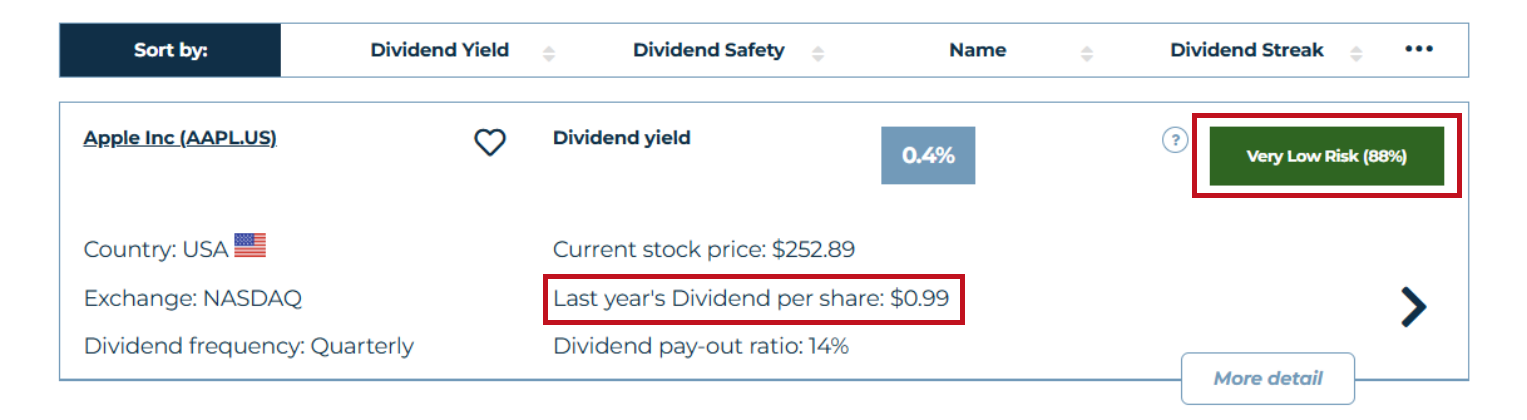
Example: Apple Inc. (DivInsights platform view)
DivInsights Safety for Apple Inc (AAPL.US): Very Low Risk
With a DivInsights Safety Score of 88, Apple Inc. is classified as Very Low Risk. Historically, about 95 out of every 100 companies in this category maintained or increased their dividends over the following 12 months rather than cutting them.
Apple’s financial profile strongly resembles companies that have historically demonstrated strong dividend stability.
In simple terms, this means:
- Higher DivInsights Safety means the company looks more like companies that have historically maintained or increased their dividends.
- Lower DivInsights Safety means it looks more like those that have historically cut or reduced dividends
Use DivInsights Safety to assess whether a company’s dividend appears sustainable.
These classifications reflect historical patterns, not guarantees of future outcomes.
How DivInsights Safety is Built
DivInsights Safety is built by analysing how a company’s financial profile compares with companies that have historically maintained their dividends and those that have cut them.
It draws on a wide range of financial indicators — including profitability, cash flow, leverage, and stability — combined through a structured model to identify patterns linked to dividend reliability.
Earnings and cash flow coverage
How comfortably the company generates enough earnings and cash flow to support its dividend
Payout discipline
How much of its earnings are distributed as dividends, and whether that level is sustainable
Balance sheet strength
The company’s level of debt and overall financial resilience, especially during periods of stress
Consistency of financial performance
How consistent the company’s financial performance has been over time
These factors are assessed together to determine whether a company looks more like businesses that have historically maintained their dividends or those that have cut them.
The result is a single DivInsights Safety classification, helping you assess dividend reliability in a structured and consistent way.
How does this perform in practice?
95
of companies classified as Very Low Risk
maintained or increased their dividends
over the following 12 months.
See the full historical results across all risk classifications, including market-specific breakdowns.
Using DivInsights Safety to Assess Dividend Reliability
DivInsights Safety expresses dividend reliability through a range of risk classifications, helping you understand how a company’s financial profile compares to patterns associated with more stable or more stressed dividends.
Each classification reflects how closely a company’s financial profile aligns with these patterns — from profiles that have historically maintained stable dividends to those where dividends have been less reliable.
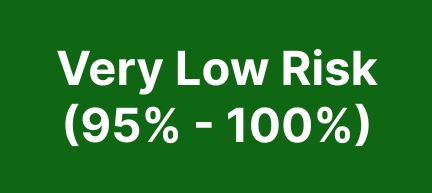
Most closely aligned with historically stable dividend profiles
Companies with financial characteristics that have most often been associated with maintaining stable dividends.
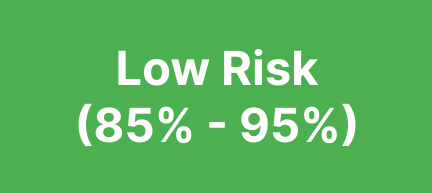
Generally consistent with stable dividend behaviour
These companies share many characteristics of historically stable dividend payers, though with slightly less strength than the lowest-risk group.
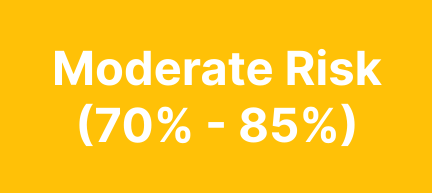
A balanced but less certain reliability profile
Some characteristics align with stable dividend patterns, while others suggest a greater degree of variability.
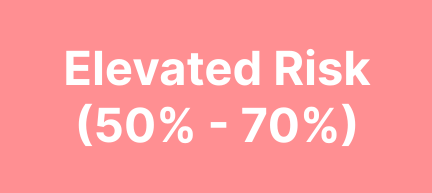
Increasing signs of potential dividend pressure
Financial profiles in this range more often resemble companies whose dividends have faced pressure or inconsistency.
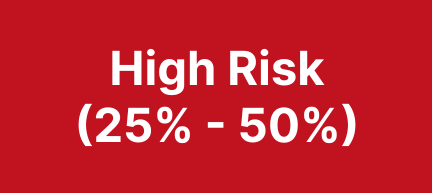
Frequently associated with dividend instability
These profiles more often align with companies that have experienced dividend pressure, reductions, or irregular payouts.
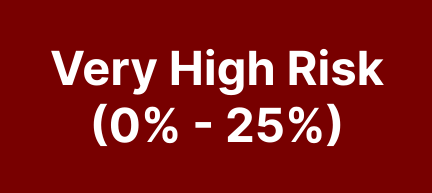
Most closely aligned with historically stressed dividend profiles
Companies in this range show financial characteristics that have most often been associated with dividend reductions or cuts.
How to Read the Percentage
The percentage indicates where a company sits between businesses that have historically maintained their dividends and those that have historically cut them.
On a scale from 0 to 100, the higher the percentage, the more the company’s recent financial profile looks like companies that have maintained or increased dividends in the past.
For example:
- 88 → a company with strong signs of dividend stability
- 53 → a company with a mix of positive and negative signals
- 14 → a company with increasing signs of dividend pressure
The percentage is not a probability or forecast. It shows how closely a company’s financial profile resembles companies that have historically maintained their dividends rather than cut them.
DivInsights Safety is best used as one input into a broader assessment of dividend reliability.
Now that you understand how DivInsights Safety works, you can apply it across companies and portfolios.
Start Assessing Dividend Reliability with Confidence
Apply DivInsights Safety to thousands of companies and compare dividend reliability in a structured, consistent way.
Structured dividend data, historical context, and model-based indicators for informational and educational use.
